
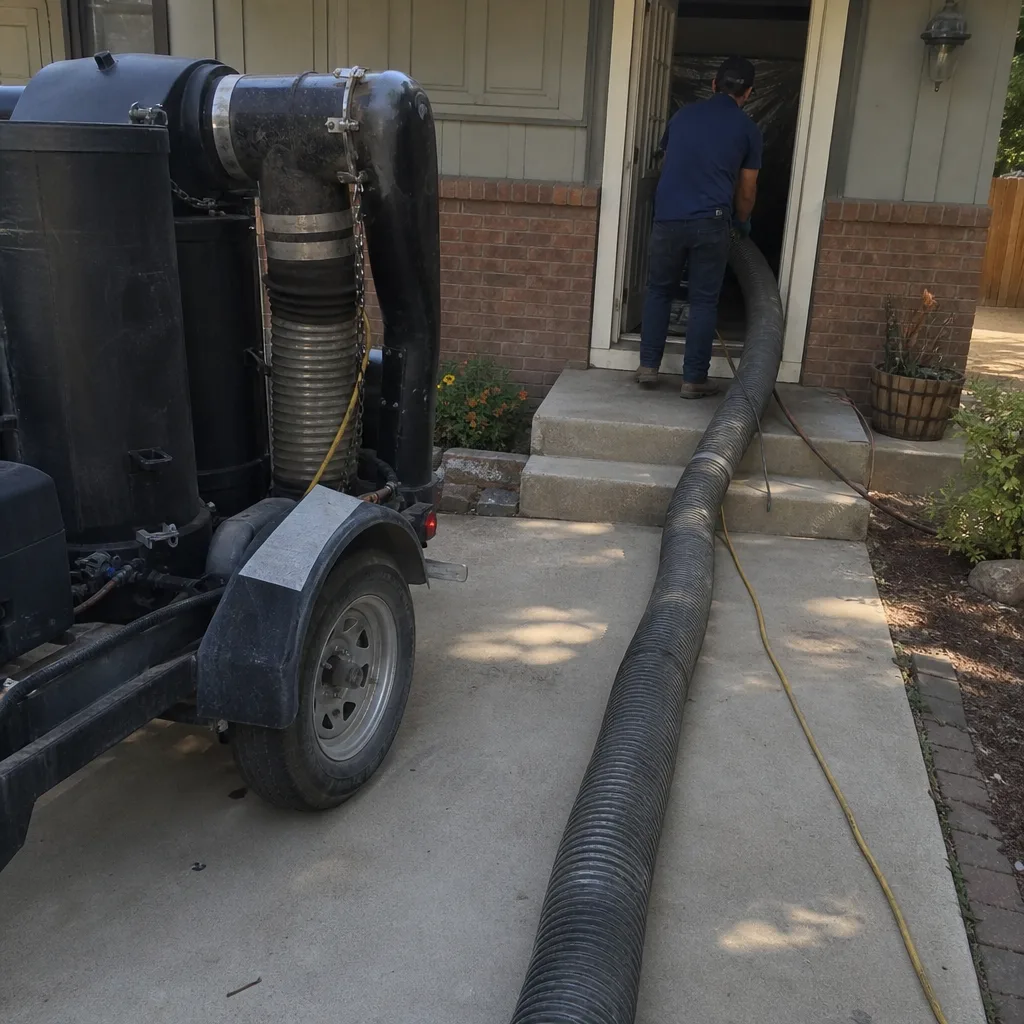
Last updated November 14, 2026
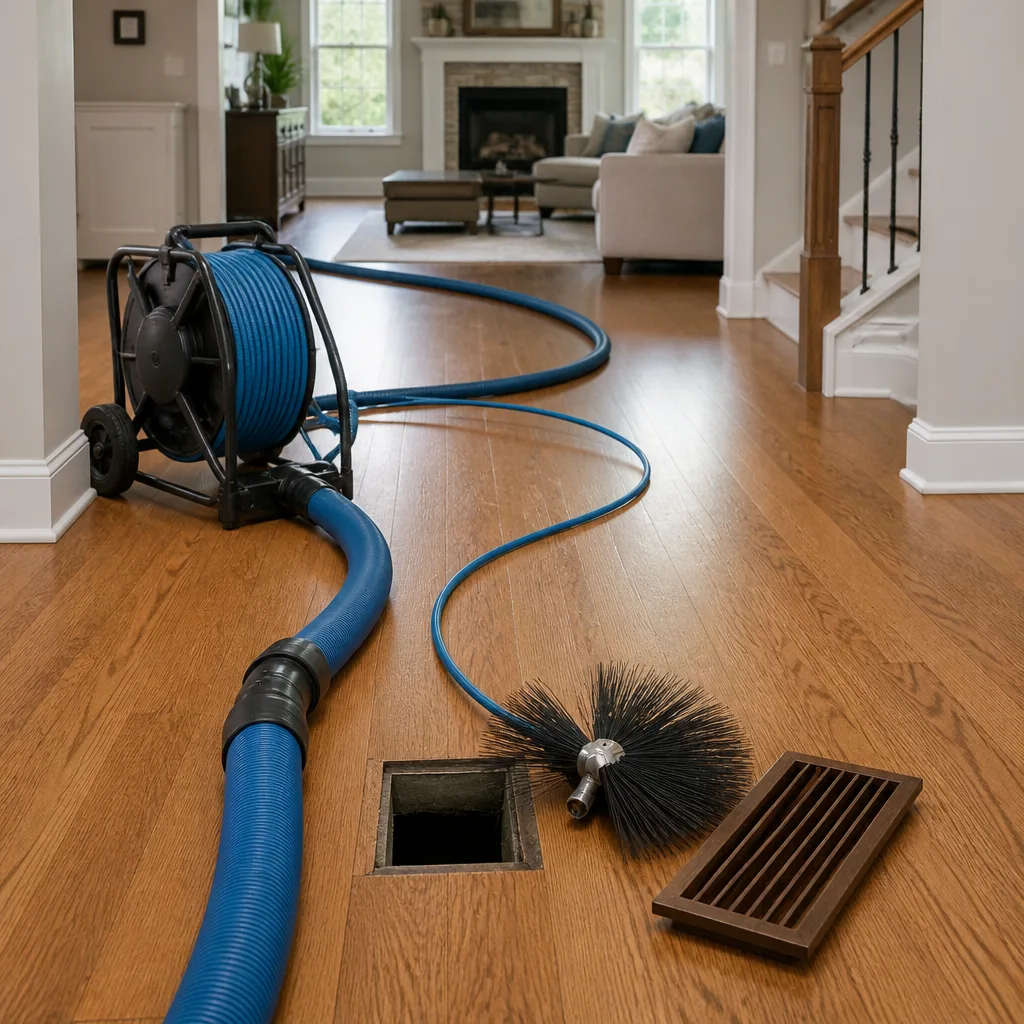 Whole-home duct cleaning
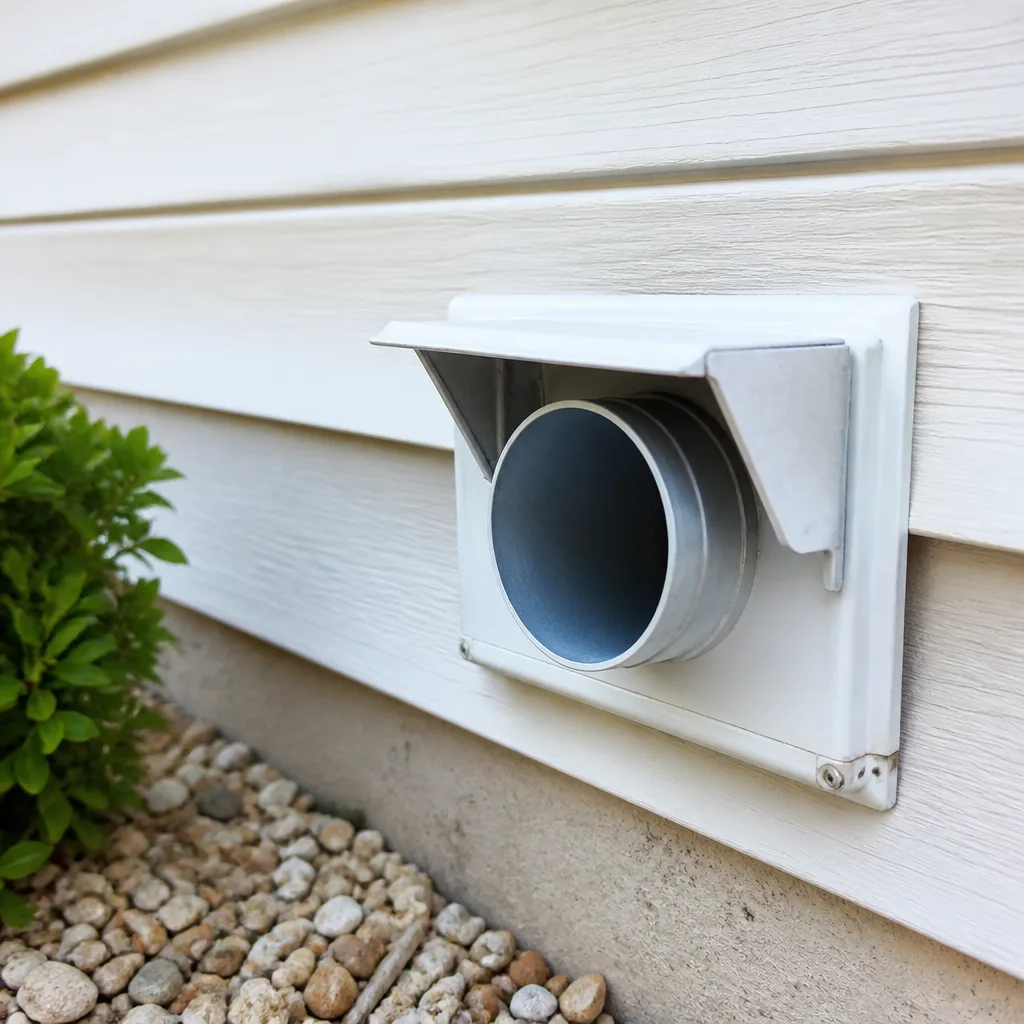 Dryer vent cleaning
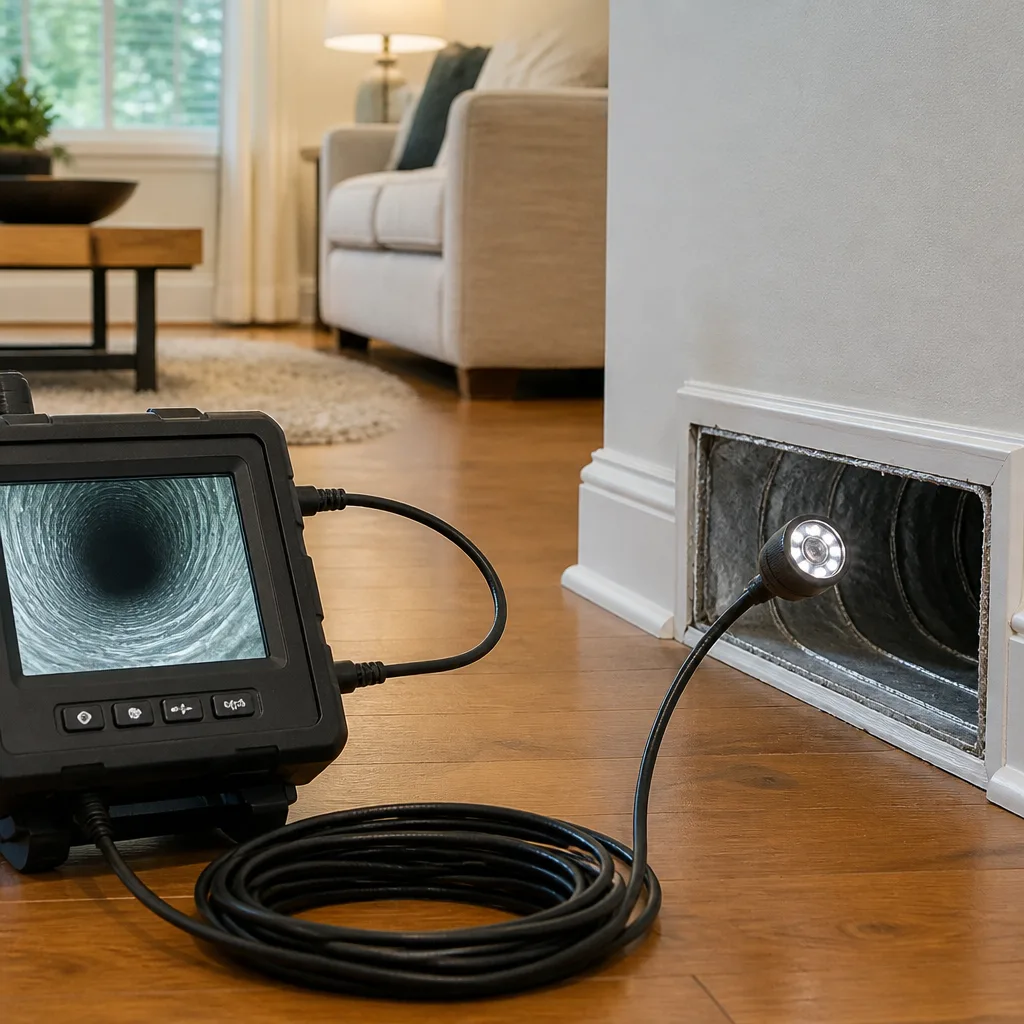 Camera inspection
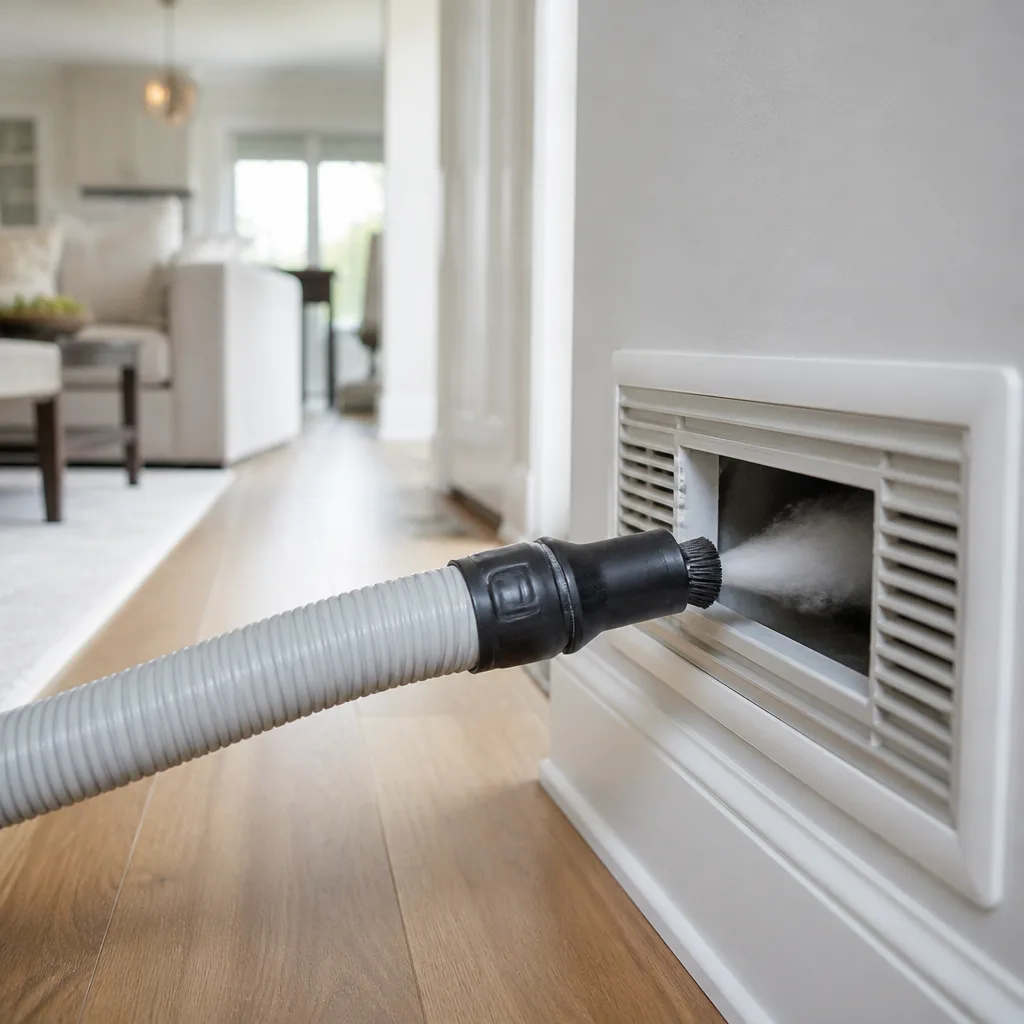 Sanitizing & deodorizing
Whole-system duct and dryer vent check with before-and-after photos - you see exactly what came out of your vents
That "$99 whole-house special" is a bait ad - the real number appears once they are in your hallway, or the "clean" is a shop-vac at the register. We photograph the inside of your ducts before and after instead.
Air Duct Cleaning Permits, Codes & Inspections in Arvada, CO: What You Need to Know
No permit is needed to clean your ducts. That part is simple. But here’s what catches people: when a technician opens up the system and finds a disconnected trunk line, a crushed branch run, or flex duct sagging away from its collar, the repair that follows may require a mechanical permit under Colorado’s adopted code. That distinction between cleaning and repair is where homeowners get surprised, and it’s usually a home inspector who delivers the news, not the contractor. This guide walks through where the permitting line actually sits, how Arvada’s jurisdiction handles it, and what paperwork should exist even when the city never gets involved.
Quick Answer
Cleaning ductwork in Arvada does not require a permit. Repairing or replacing ductwork may require a mechanical permit, because the work falls under the International Mechanical Code as adopted by Colorado and enforced locally. Whether a specific job needs one depends on scope: sealing an accessible joint is typically non-permitted, while full duct replacement, new branch runs, or rerouting triggers the permitting process. Always confirm with the authority having jurisdiction before work starts.
Styles & brands we work with
- Whole-home duct cleaning
- Dryer vent cleaning
- Camera inspection
- Sanitizing & deodorizing
Table of Contents
- How Colorado’s Mechanical Code Separates Cleaning from Repair
- Arvada’s Building Authority and Jefferson County Nuances
- What Actually Needs a Permit: A Practical Breakdown
- Duct Sealing vs. Duct Replacement: Where the Line Sits
- How Unpermitted Duct Work Surfaces at Resale
- What Buyers’ Inspectors Actually Look For
- The Paper Trail You Should Get Even Without a Permit
- Why Arvada’s Climate Makes Duct Integrity Matter
How Colorado’s Mechanical Code Separates Cleaning from Repair
Colorado adopts the International Mechanical Code at the state level, and individual jurisdictions enforce it through their own building departments. The IMC governs the installation, alteration, repair, and maintenance of mechanical systems, which includes ductwork. Cleaning is classified as maintenance. Repair and alteration sit on the other side of the ledger.
This is the trigger point most homeowners miss. The code doesn’t say “any ductwork touched requires a permit.” It says that alterations, replacements, and new installations require one. Removing dust and debris from an existing system is maintenance. Cutting out a section of crushed flex duct and installing new material is an alteration. That’s where the paperwork begins.
In practical terms, here’s how we explain it to homeowners across the Arvada service area:
- Maintenance: cleaning, sanitizing, vacuuming, and removing debris. No permit.
- Minor repair: taping a joint, applying mastic to a small leak on an accessible section. Typically no permit, but document the work.
- Alteration: replacing a section of duct, rerouting a branch run, adding a new supply or return. Permit may be required.
- New installation: adding ductwork for a new zone, a remodel, or a system upgrade. Permit required.
The distinction matters because a technician who finds a problem mid-cleaning shouldn’t stop and tell you to schedule a second visit weeks later. Our position is that duct repair is a core service, not a referral. We clean it and we fix it. But if the repair crosses into alteration territory, that’s when the permit conversation comes up, and we walk through it with the homeowner before touching anything.
Arvada’s Building Authority and Jefferson County Nuances
Arvada straddles county lines, which adds a wrinkle. Much of the city sits in Jefferson County, and western portions extend into Adams County. The building department that issues the permit is the one with jurisdiction over the specific property address, not the one with the more convenient phone number or website.
This means two homes a few blocks apart on the same Arvada street may actually be governed by different permitting processes. Before any duct alteration begins, the address should be checked against the correct jurisdiction. That’s not the homeowner’s job to sort out, but it’s worth knowing that a contractor who says “we’ll just call the county” without confirming which county might be calling the wrong office.
Arvada’s own building department enforces the adopted code within city limits. For unincorporated Jefferson County parcels that carry an Arvada mailing address but sit outside city boundaries, the county handles the mechanical permit. The same is true on the Adams County side. It’s a small thing that catches people who assume municipal boundaries match postal addresses.
The practical takeaway: when a repair is proposed, the first question isn’t “do we need a permit” but “which authority has jurisdiction here.” That single step prevents most of the confusion we see. It also explains why some Arvada homeowners end up with work done by a contractor who pulled a permit from the wrong office, which creates its own headaches at resale.
What Actually Needs a Permit: A Practical Breakdown
This is the question we get most often, and the answer depends entirely on scope. Here’s how the work breaks down in practice, with the permit status alongside each category.
- Standard air duct cleaning. No permit. This is maintenance under the mechanical code, whether you’re cleaning one system or a whole house. Every air duct cleaning job falls into this category unless repair work is added.
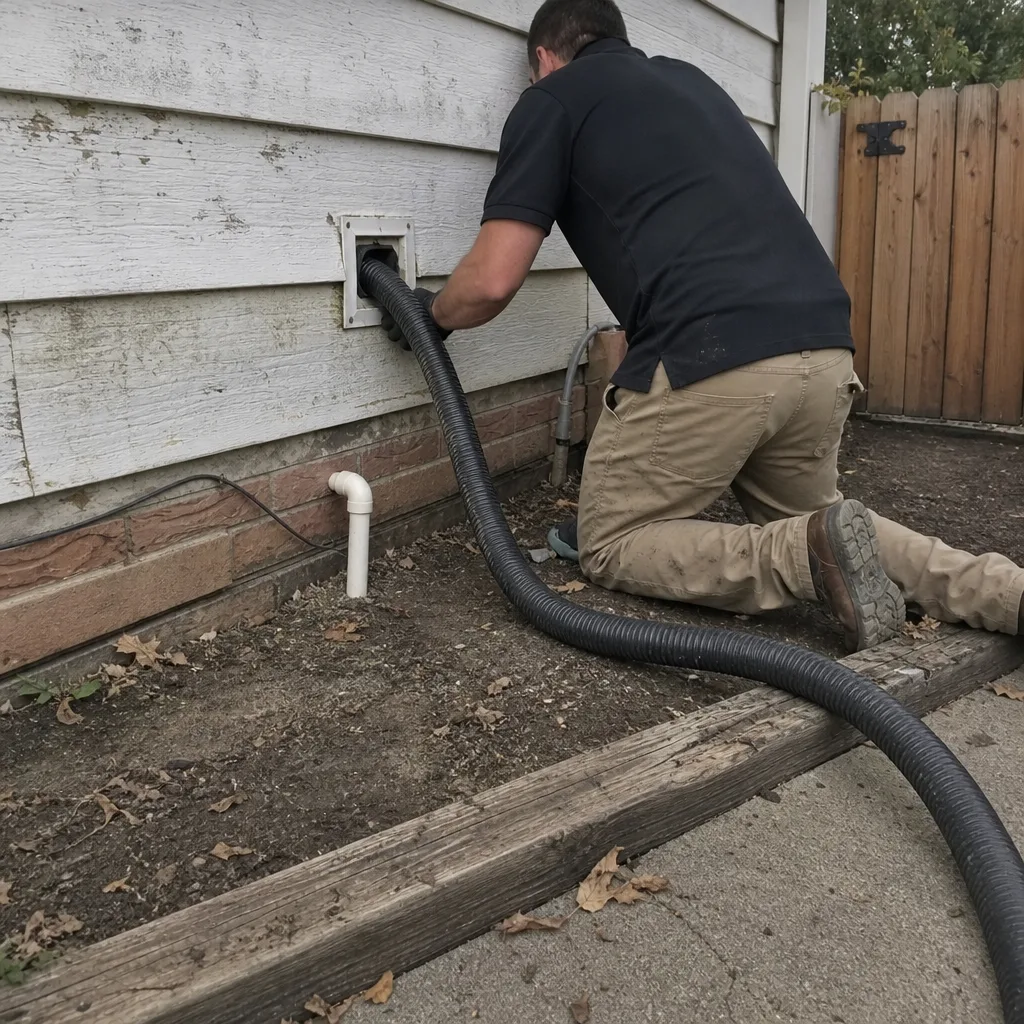
- Dryer vent cleaning. No permit. Same reasoning – it’s maintenance of an existing appliance vent, not a mechanical alteration. Our dryer vent cleaning service falls here.
- Mastic or foil tape on an accessible joint. Typically no permit. Sealing a leak at an accessible connection is considered minor repair. Document it, but the city likely won’t need to see it.
- Replacing a section of damaged duct. Permit may be required. This is where the line blurs. A short section of flex duct replaced because it was crushed during a remodel is often treated as repair. A longer run or a change in duct type is alteration.
- Rerouting or adding a branch run. Permit required. Adding a new supply or return, or moving an existing one, changes the system design and triggers the permitting process.
- Full duct system replacement. Permit required. Complete replacement of the ductwork is a mechanical alteration by any reasonable reading of the code.
- Installing a new filter or IAQ accessory at existing equipment. Depends. A simple in-duct filter or a whole-home humidifier install may or may not require a permit depending on the local reading. Check with the building department before the install, not after.
If you’re unsure which category your job falls into, the safe answer is always to call the building department and describe the scope in plain language. “I’m replacing a six-foot section of crushed flex duct” gets a clearer answer than “I’m having some duct work done.”
Duct Sealing vs. Duct Replacement: Where the Line Sits
Sealing is cosmetic-adjacent maintenance. Replacement is structural work. The code treats them differently, and the difference matters most when you’re talking to a contractor about what’s actually needed.
Sealing with mastic or foil tape on an accessible section is nearly always non-permitted. If you can reach the joint, reach it, seal it, and move on. That’s the everyday work we do after identifying leaks during cleaning, and it doesn’t require calling the city. The caveat is that the seal has to be on accessible ductwork. Duct buried inside a wall cavity, a chase, or a finished ceiling changes the equation. Access matters, and if a joint is sealed in an inaccessible location, most inspectors will want documentation.
Full replacement is different. When flex duct collapses, when a trunk line has separated at a fitting and can’t be reconnected properly, or when an older rigid duct system has deteriorated past the point of repair, replacement is the right call. It’s also alteration work, which means the permitting process applies. On a residential system in Arvada, that usually means a mechanical permit filed with the correct jurisdiction before the work begins.
New branch runs are the third category, and they behave differently from both. If you’re adding a supply to a room that never had one, or moving a return to a better location, you’re not sealing or replacing. You’re altering the system design. Permits almost always apply here, and the inspection looks at sizing, airflow, and connection quality, not just whether the duct is physically attached.
The line, in short: sealing an accessible joint is maintenance. Replacing ductwork or adding runs is alteration. Repair of an integrity failure that isn’t a full replacement sits somewhere between them and depends on scope and jurisdiction.
How Unpermitted Duct Work Surfaces at Resale
Here’s the pattern we hear about most often. A homeowner buys a house, lives in it for years, and eventually lists it. The buyer’s inspector goes into the crawlspace or attic, sees ductwork that doesn’t match what the original drawings show, and asks the homeowner for documentation. The homeowner has none, because the previous owner did the work and never mentioned it, and there’s no permit on record.
That’s the moment the issue comes back to life. Unpermitted duct work isn’t discovered during the job, or the week after. It surfaces months or years later, during a real estate transaction, when a buyer’s inspector flags “recent duct modifications with no visible permit documentation.” The seller then has to either pull a retroactive permit, correct the work, or negotiate the price down to account for the discrepancy.
What makes this worse is that some of the work may be completely fine. A properly sealed joint that a homeowner correctly identified as a leak may be perfectly legal, but without any record, the inspector can’t tell legal from illegal. Their job is to flag what can’t be verified, and unpermitted duct work is unverifiable by default.
We recommend documenting every duct repair, no matter how small. A dated photo, a brief written scope, and the name of the technician who did the work. For Arvada homeowners, that paper trail is worth keeping with the home’s maintenance records, alongside receipts for the furnace, the water heater, and any major appliance repair. It’s a small habit that prevents a surprisingly large headache.
What Buyers’ Inspectors Actually Look For
A home inspector on a pre-sale walkthrough isn’t going to disassemble your ductwork. They see what’s visible, and they flag what doesn’t match expectations. Here’s the short list of what they actually check.
- Visible duct material mismatches. New flex duct spliced into older rigid duct is a common flag because it suggests recent modification.
- Disconnected sections. A visible gap, a flex duct pulled off its collar, or a taped joint that’s failed. All observable and all flagged.
- Missing or incomplete wrap insulation. Ductwork in an unconditioned space that isn’t insulated, or where the wrap has been cut away and not repaired.
- Inconsistent support. Flex duct sagging past its specified support intervals or ductwork hanging loosely. Inspectors know what proper support looks like and flag deviations.
- Evidence of unpermitted alterations. Non-standard routing, capped returns, or new branch runs that don’t appear on the original drawings.
- Documentation gaps. If a repair was done and there’s no permit on record and no written documentation, the inspector notes it.
Inspectors understand that duct work gets touched over the life of a home. Minor repairs are normal. What they flag is work that looks like it was done without thought, or work that has no record. If you’re selling an Arvada home and you’ve had any duct modifications, gather the documentation before the inspection, not after.
The Paper Trail You Should Get Even Without a Permit
Not every job needs a permit. Every job should still leave a paper trail. That’s a baseline we hold to regardless of scope, and it’s part of why we bring duct cleaning in Arvada to the level of documentation we do.
Here’s what a reputable contractor should hand you at the end of the work, even for a maintenance-only cleaning where no permit was ever involved:
- A written scope of work. What was done, where it was done, and any issues found in the system. This is what prevents the “unpermitted work” flag at resale – not a permit, but a record of what happened.
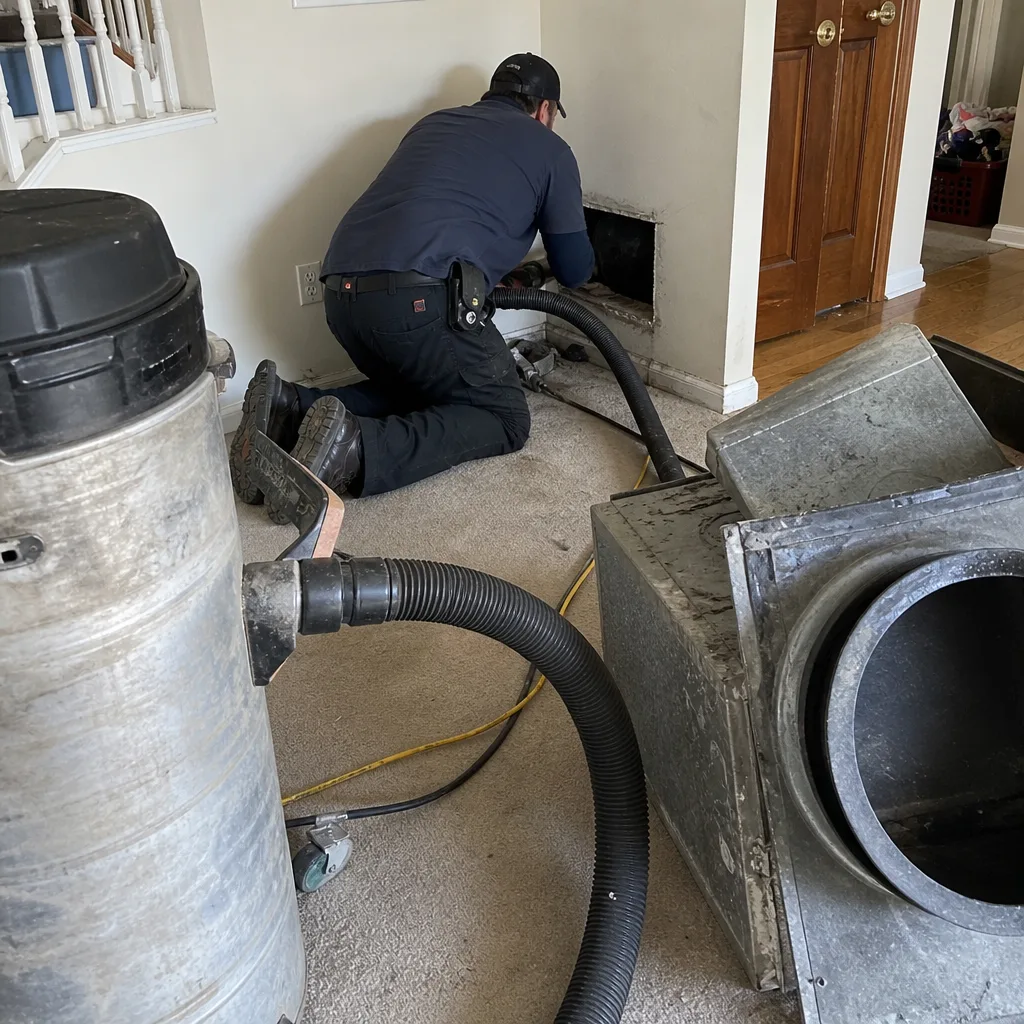
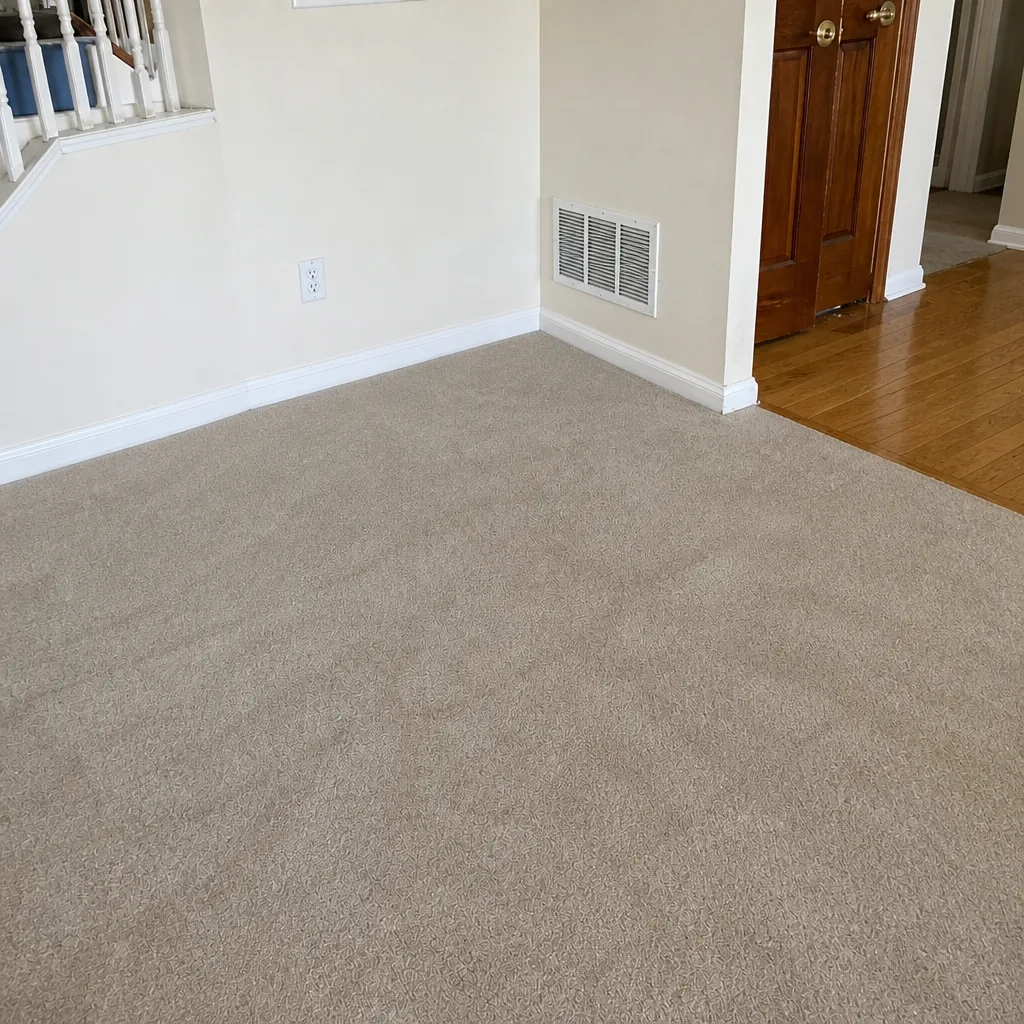
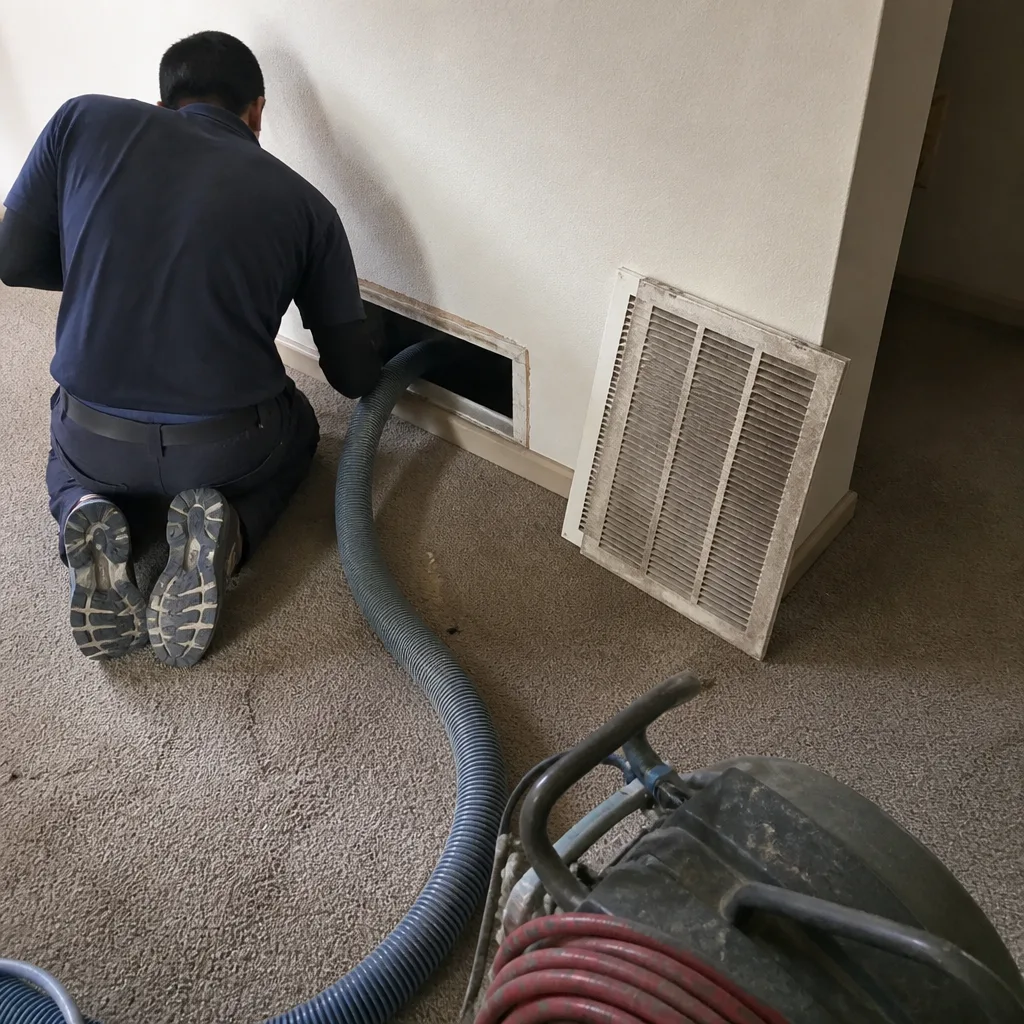
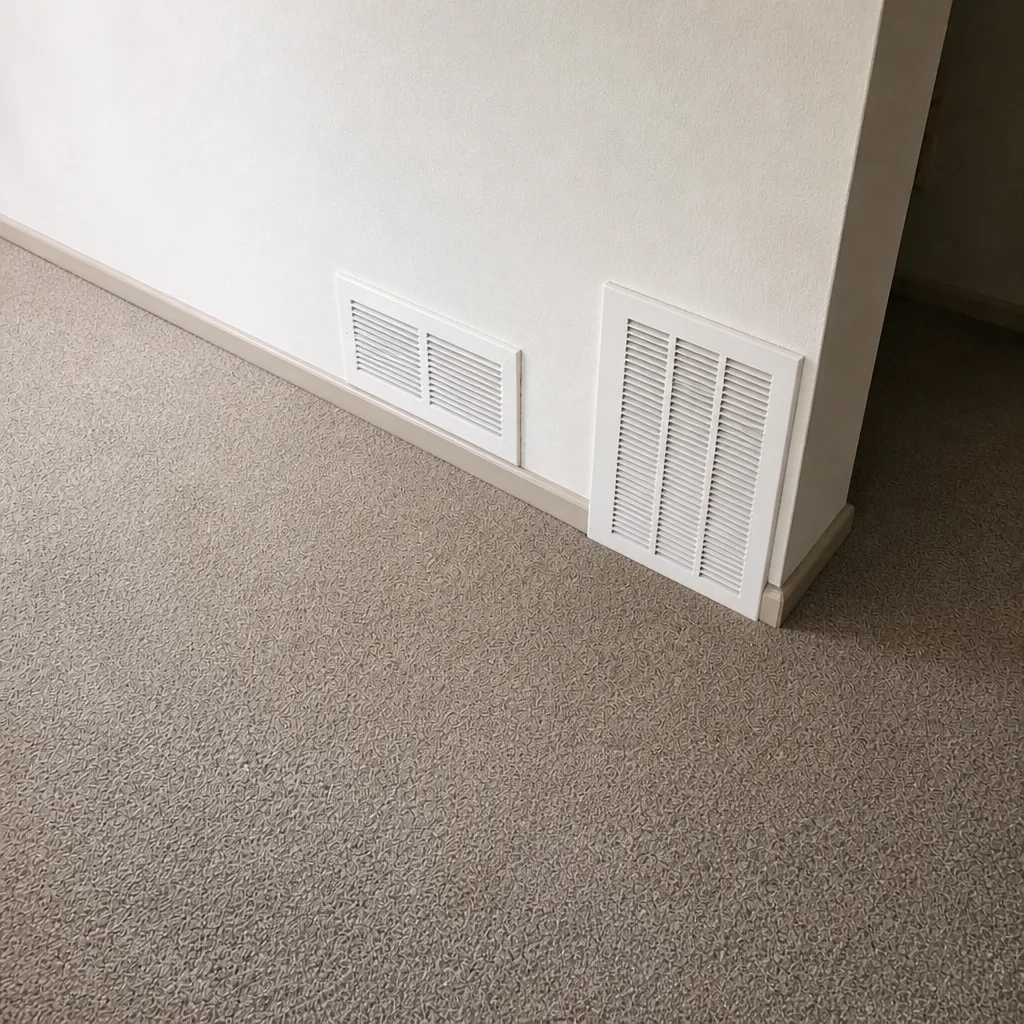
- Before-and-after photos. Visual documentation of the ducts, both pre- and post-cleaning. This is the single most useful piece of paper in the file when questions arise, and it’s standard on every job we run.
- Equipment list. A note of which cleaning system was used (Rotobrush, Nikro, or Abatement Technologies containment) tells a future inspector or buyer that professional equipment was involved.
- Any repair documentation. If duct work was repaired during the visit, the repair scope, materials used, and location should be on the invoice. For permitted repairs, attach the permit number.
- Recommendations. If the technician identified an issue that wasn’t part of the scope – say, a section of duct that’s about to fail – that should be on paper too, with a note about whether a permit would apply for that work.
Documentation is what separates a professional job from a “trust me” job. It’s also what fills the gap when the code doesn’t require a permit but a future buyer asks anyway. We recommend keeping these records in the same folder as your appliance manuals. When it’s time to sell, everything is in one place.
Why Arvada’s Climate Makes Duct Integrity Matter
Arvada sits along the Front Range, and the climate swings hard. Winters bring sustained cold and rapid freeze-thaw cycles. Summers run dry and hot. Ductwork that runs through unconditioned spaces – attics, crawlspaces, garages – experiences all of it, and the material fatigue that follows is real.
What does that look like in practice? Flex duct that was installed correctly can sag over years of exposure. Rigid duct tape that was fine when it was applied can dry and crack when a swing in temperature stresses it. Attic ductwork that gets very cold in winter and very hot in summer cycles through expansion and contraction that loosens connections over time.
None of that is a code issue on its own. It’s a maintenance issue that becomes a repair issue if left alone, and a repair issue can become a permit issue depending on scope. Paying attention to duct integrity in the Front Range climate means catching small failures before they become structural repairs, which is why our work on this side of the line starts with what we can see inside the system.
If your furnace is running more than it used to, if dust accumulates faster than it used to, or if there’s a smell when the system kicks on, those are the signals worth a look. The duct integrity check is the diagnostic step that comes before any conversation about repair or permits.
Common Mistakes to Avoid
- Assuming a cleaning quote covers repair. Cleaning is maintenance and doesn’t require a permit. Repair is alteration and might. Get a written quote that clearly separates the two before work starts.
- Letting a contractor tell you “no permit needed” without checking jurisdiction. Arvada’s location across Jefferson and Adams counties means the correct permitting office depends on the address, not the mailing city. Verify before the work begins.
- Skipping documentation on a “minor” repair. Even a small joint seal should be documented. Missing paperwork is the number one reason duct work gets flagged at resale.
- Hiring a cleaning-only contractor for a repair-and-clean job. A contractor without repair capability will clean the accessible sections, note that some duct work is failing, and hand you a referral. That’s not what you’re paying for.
- Ignoring a failing flex duct connection because “it’s just a small leak.” Small leaks become large ones under freeze-thaw cycles. What starts as a $200 repair becomes a $2,000 replacement.
- Doing duct work yourself in a newly remodeled space. Any alteration inside a permitted remodel becomes part of that permit’s scope. Adding duct work without integrating it into the existing permit can create a much larger paperwork problem later.
- Assuming “reputable contractor” means “pulled a permit.” A reputable contractor will tell you when a permit applies and confirm jurisdiction. A contractor who says “we don’t need paperwork for that” on a scope that clearly warrants one should be the second call, not the first.
See the difference
 Before
 After
 Before
 After
 Before
 After
When to Call a Professional
If your ducts are visibly damaged (a section of flex duct pulled off its collar, a crushed trunk line, a disconnected branch), the work is past cleaning and into repair territory. If a heating or cooling system is operating with reduced airflow that isn’t explained by a filter, the diagnosis should start with the ductwork. If you’re within sight of selling a home and you can’t produce documentation for duct work that was ever modified, getting that paper trail in order is worth the effort. If a technician tells you that a repair may require a permit, that’s not a red flag – it’s the correct answer, and the next step is confirming jurisdiction and scope. Duct Cleaning Arvada offers free estimates in Arvada – call (833) 370-4086.
Frequently Asked Questions
No. Air duct cleaning is classified as maintenance under Colorado’s adopted mechanical code and does not require a permit, whether you’re cleaning one system or a whole house.
Alteration and replacement trigger the permitting process. Replacing a section of duct, rerouting a branch run, adding a new supply or return, or replacing the entire duct system all generally require a mechanical permit. Sealing an accessible joint is usually treated as maintenance and doesn’t.
It depends on the specific property address. Arvada’s building department handles permits within city limits. Unincorporated Jefferson County parcels with an Arvada mailing address are handled by the county. Western Arvada extends into Adams County, which has its own process. Confirm jurisdiction for the actual address before starting work.
A written scope of work, before-and-after photos of the ducts, equipment documentation, and any repair notes should come with every job. This is what prevents the “unpermitted work” flag at resale and gives future buyers confidence that the work was professional.
A buyer’s home inspector flags duct modifications that don’t match the original drawings and can’t be verified against permit records. Without documentation, the seller has to pull a retroactive permit, correct the work, or negotiate the price. Having a documented paper trail from the original job prevents that outcome.
Have the property address handy so the correct permitting jurisdiction can be confirmed, note any visible duct issues (crushed flex, disconnected sections, sagging runs), and be ready to describe any recent renovations that touched the HVAC system. This lets the contractor scope the job and identify whether a permit applies before work starts. Call (833) 370-4086 for a free estimate.
The Bottom Line
Air duct cleaning in Arvada doesn’t require a permit, and the work is treated as routine maintenance under Colorado’s adopted mechanical code. Duct repair is the piece of the puzzle that requires more attention, because the permitting line depends on scope and jurisdiction. Sealing an accessible joint is usually maintenance. Full replacement, new branch runs, and duct rerouting are alteration work, and alteration work may require a permit filed with the correct authority for the specific property address. Documentation is what protects you when a permit wasn’t required and what protects you when it was. Keep the paper trail on every job, no matter how small.
If you’re in Arvada and want a straight answer about whether your repair scope needs a permit, or want to schedule cleaning with a contractor who can also repair what’s found, call Duct Cleaning Arvada at (833) 370-4086 for a free estimate. We answer 24/7. Fast dispatch from 7am to 7pm, Sunday through Friday. Our technicians have up to 12 years of experience, and we bring restoration-grade equipment from Rotobrush, Nikro, and Abatement Technologies to every job.
Written by the team at Duct Cleaning Arvada.