
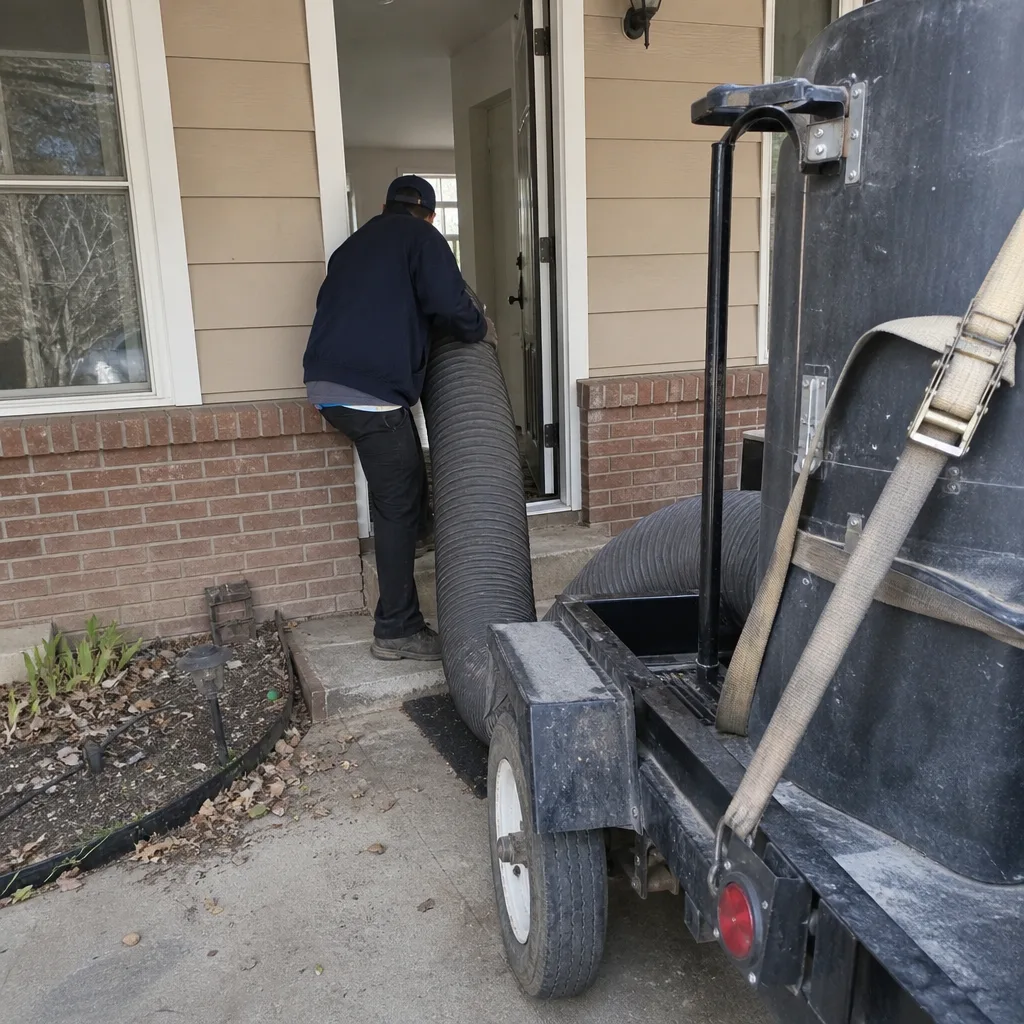
Last updated November 14, 2026
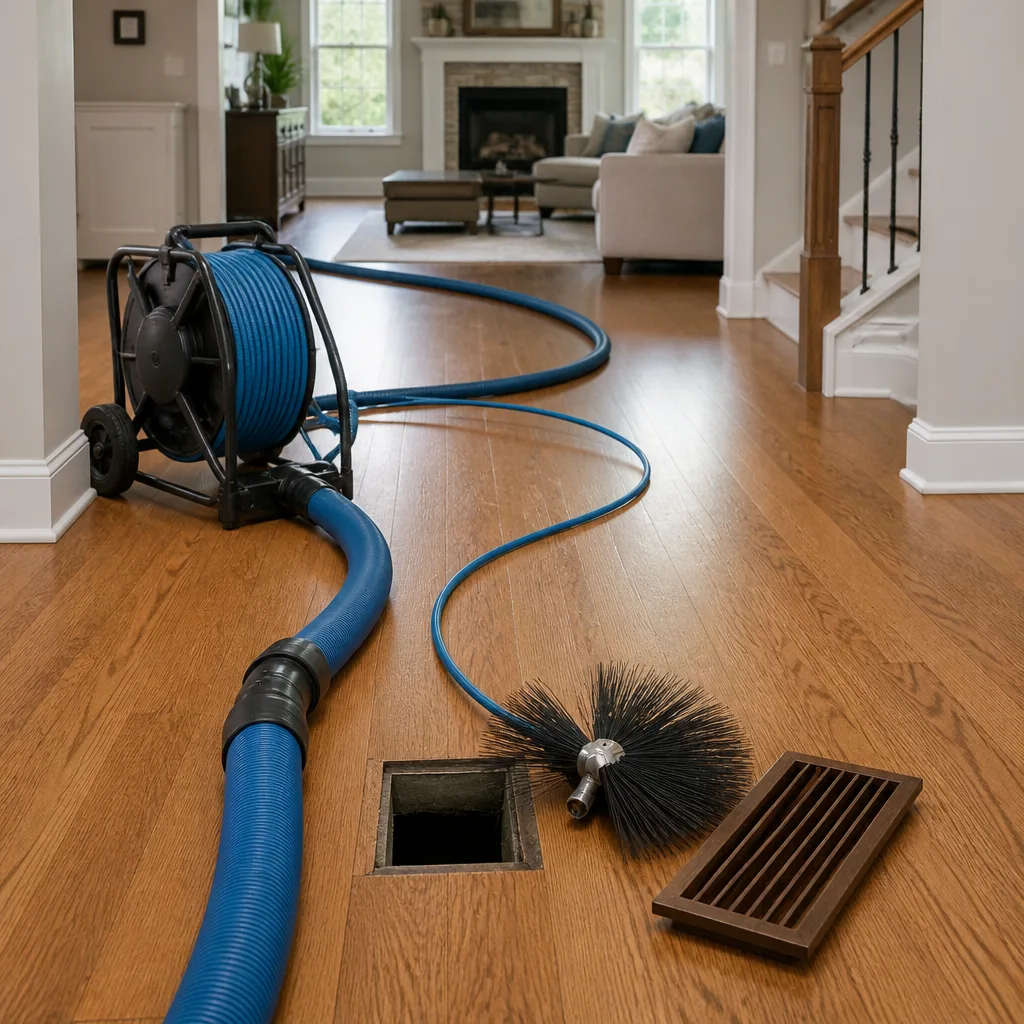 Whole-home duct cleaning
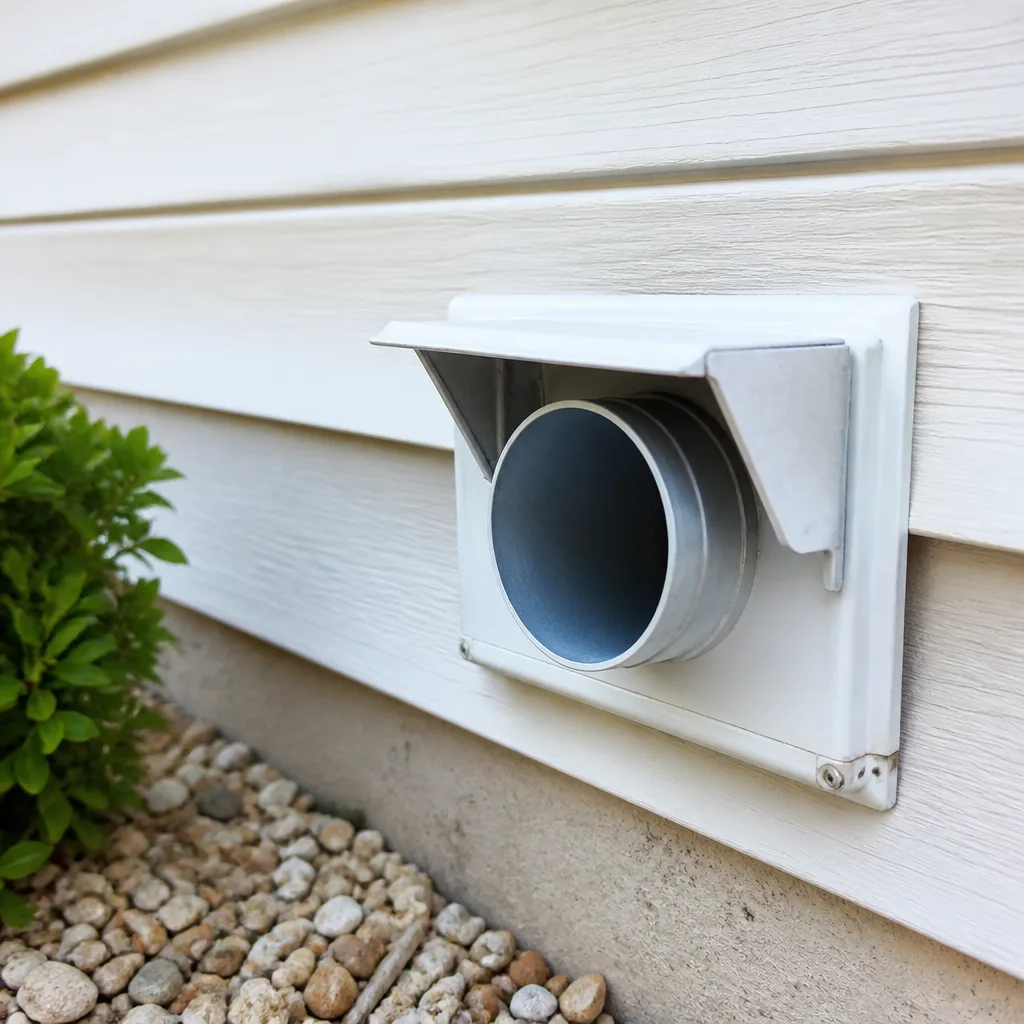 Dryer vent cleaning
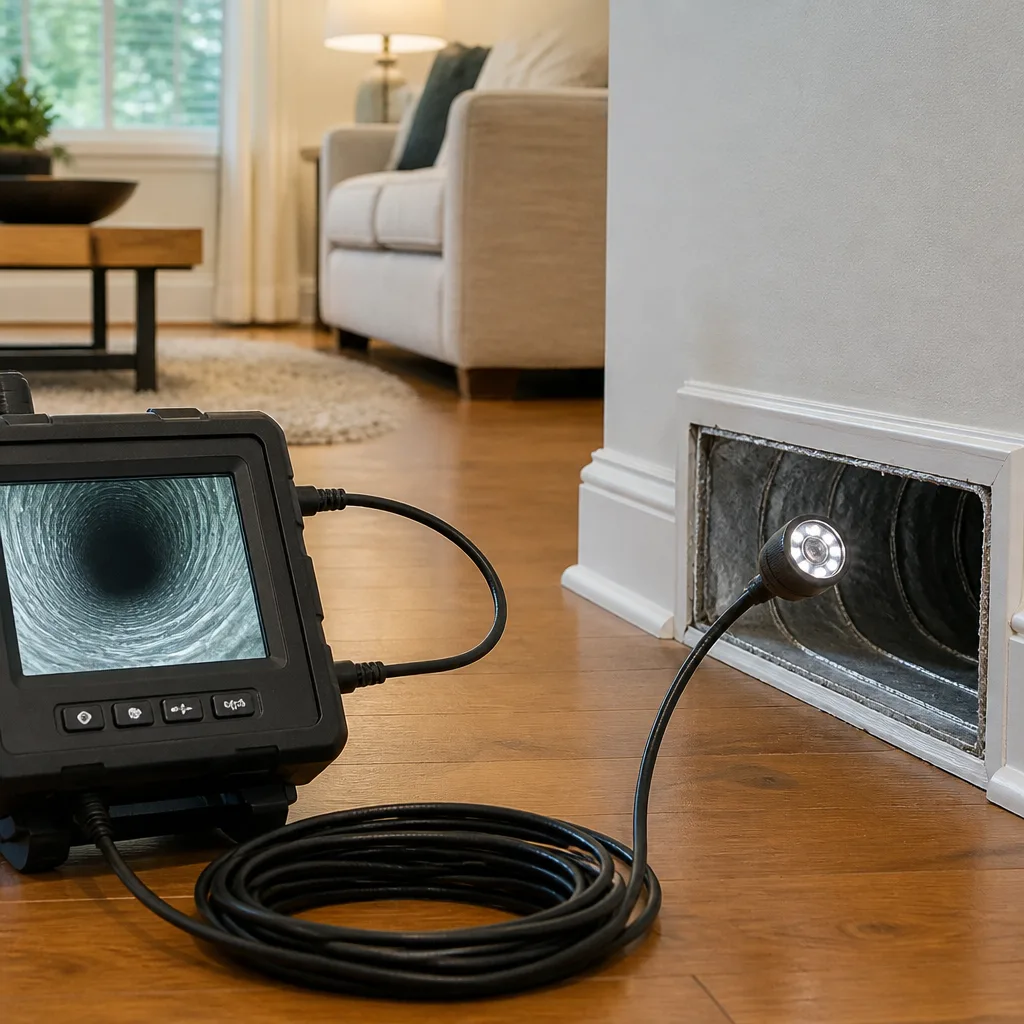 Camera inspection
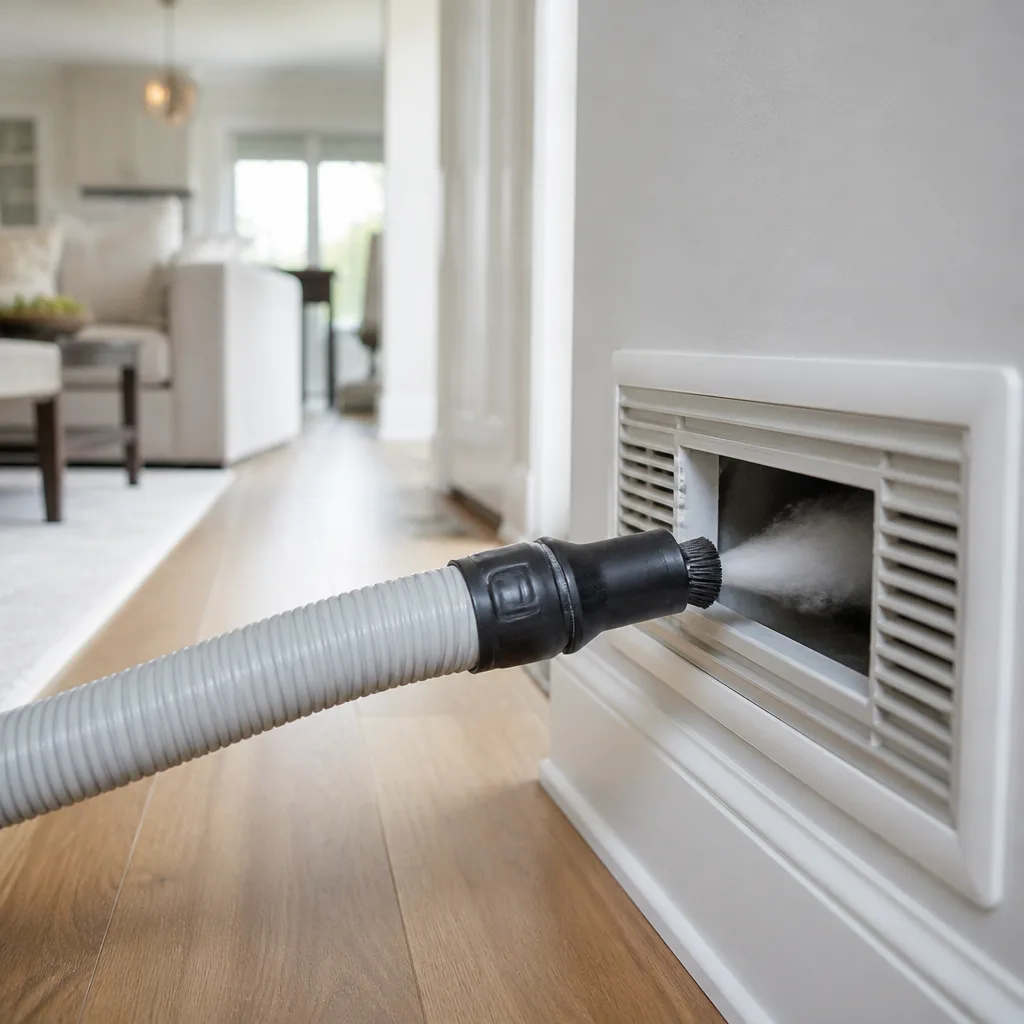 Sanitizing & deodorizing
Whole-system duct and dryer vent check with before-and-after photos - you see exactly what came out of your vents
That "$99 whole-house special" is a bait ad - the real number appears once they are in your hallway, or the "clean" is a shop-vac at the register. We photograph the inside of your ducts before and after instead.
Air Duct Cleaning Troubleshooting in Arvada: Common Problems and How to Fix Them
If your ducts were cleaned six months ago and the dust is already settling back on the furniture, the cleaner probably didn’t fail. Your duct system has a structural problem that no amount of vacuuming will fix. This is the single most misunderstood thing about duct work, and we see it constantly in Arvada: homeowners book a second cleaning to solve a problem a second cleaning can’t touch. What follows is a troubleshooting guide, not a sales page. You’ll learn how to tell leakage from contamination, what a collapsed flex run looks like from a register, how static pressure readings point to a restriction before anyone touches your system, why mold keeps returning in certain Arvada basements, and how to decide whether you need a re-clean, a repair, or a look at the furnace itself.
Quick Answer
Recurring dust, uneven airflow, and musty odors after a duct cleaning almost always trace back to a physical fault inside the system: disconnected or crushed flex duct, leaking seams and boots, a failed moisture barrier in a crawlspace, or an air handler that can’t move enough air. A responsible troubleshooting sequence is diagnose first, repair the fault, then clean. Cleaning without fixing the cause just resets the clock on the same complaint.
Styles & brands we work with
- Whole-home duct cleaning
- Dryer vent cleaning
- Camera inspection
- Sanitizing & deodorizing
Table of Contents
- Duct Leakage vs. Contamination: Which One Do You Actually Have?
- Collapsed and Crushed Flex Duct: The Hot and Cold Room Problem
- How to Use Static Pressure Readings to Find a Restriction
- Why Mold Comes Back in Arvada Basement and Crawlspace Systems
- The Decision Tree: Re-Clean, Repair, or Look at the HVAC Unit?
- What Actually Fails in a Duct System, and Why
- Dryer Vent Problems That Get Mistaken for Duct Problems
- What a Proper Diagnostic Visit Should Look Like
Duct Leakage vs. Contamination: Which One Do You Actually Have?
These two problems produce nearly identical complaints, and homeowners almost always assume it’s contamination. Dust on the coffee table, a film on the ceiling fan blades, a faint smell when the heat kicks on. Before you schedule anything, the useful question is whether debris is being stirred up inside a sealed system or whether unfiltered air is being pulled in from somewhere it shouldn’t. That distinction decides the whole repair path.
Contamination lives inside the ducts. It’s settled dust, drywall residue from an older remodel, pet hair packed against the register boots, or construction debris left in a run. A professional cleaning with proper containment and extraction removes it, and the problem should stay gone for a reasonable stretch.
Leakage is different. It’s the system breathing air it never should have taken in. Return-side leakage is the worst offender because return ducts run under negative pressure. Every gap, every unsealed boot-to-drywall joint, every improperly mated flex connection pulls in whatever is in the cavity around it: attic insulation fibers, crawlspace soil, garage fumes if the return is anywhere near it. Cleaning the ducts and leaving a leaking return in place gives you a system that re-contaminates itself.
Here’s how to tell them apart in practical terms:
- Dust appears fast, not slowly. If the layer returns within weeks rather than months, suspect leakage, not leftover debris.
- Dust is concentrated near specific rooms. Leakage often shows up worst in rooms closest to the air handler or where the return is nearest the crawlspace or attic.
- The system pulls air with the filter door open. A visible draw around a boot or plenum tells you the pressure boundary is broken.
- Smells track with what’s nearby. A faint musty or earthy note that only shows up when the fan runs points at an outdoor connection, not the duct interior.
- Repeat cleanings help less each time. If cleaning worked well the first time and barely helps the second, contamination likely wasn’t the whole story.
For Arvada homes, the leak check is more pressing than it sounds. Many of the neighborhoods built out in the 1970s and 1980s have flex runs stapled and mastic-sealed in attic spaces that see summer attic temperatures well above 100°F. That heat cycle ages mastic and tape, and small gaps become real gaps over time. If you want the full picture on how cleaning fits into this, our overview of air duct cleaning covers what a contained, extraction-focused job looks like from start to finish.
Collapsed and Crushed Flex Duct: The Hot and Cold Room Problem
A collapsed flex duct is the most common structural fault we find in Arvada homes, and it’s also the most misdiagnosed. The symptom is straightforward: one room that never gets comfortable, no matter what you set the thermostat to. A bedroom that stays five degrees warmer in summer and five degrees cooler in winter. Homeowners replace thermostats, add vents, adjust dampers, and get nowhere.
What’s happened is a shop-floor problem, not an HVAC control problem. Flex duct is a plastic tube over a wire helix, and it doesn’t tolerate abuse. It sags when it isn’t supported properly. It kinks when it’s routed around a sharp corner. It crushes when storage boxes, ductboard, or a water pipe are laid on top of it in the attic. It also crushes at the boot when the installer cut it too long and crammed the excess into the cavity.
You can do a useful visual check from the register without disassembling anything:
- Pull the grille off a suspected room. Shine a light into the run. A settled, kinked, or crushed flex run looks visibly pinched, wavy, or sealed shut inside the tube.
- Compare airflow across rooms. Hold a piece of tissue or a piece of thin paper to each register. The difference between a healthy run and a collapsed one is usually obvious.
- Look at the inner liner. Many flex products have a smooth inner sleeve and a vapor jacket over it. If the inner sleeve is torn or detached, the wire helix can balloon the liner and choke the flow.
- Check the attic run route. If the run goes around a bend rather than a gradual sweep, the bend is a restriction. Short, straight runs move air. Long, kinked ones don’t.
This is where cleaning-only companies hit a wall. They arrive, clean every run they can reach, and leave the collapsed one exactly as they found it, because fixing it isn’t part of the job. We treat air duct repair as a core service, not a referral: if we find a crushed run, we can replace or re-route it on the same visit and then verify flow at the register before we pack up. That’s the difference between cleaning the system and fixing it.
How to Use Static Pressure Readings to Find a Restriction
Static pressure is the diagnostic tool that separates a real diagnosis from a guess. It measures how hard the blower has to push air through the system, and it tells you whether the problem is a restriction in the ducts or a blower that isn’t moving enough air in the first place. You don’t need to understand all the math. You need to understand what the readings mean.
A technician takes two readings: supply-side static and return-side static, measured in inches of water column (in. w.c.) through small test ports in the plenum. Typical residential systems are designed to see a total external static pressure around 0.5 in. w.c. for standard PSC blowers, though exactly what’s “normal” depends on the equipment and the duct design. What matters is the split between the two sides and the total.
- High return-side static. The return path is restricted. Undersized return ducts, a clogged filter, a crushed flex return, or a closed return grille all show up here.
- High supply-side static. The supply side is restricted. Collapsed runs, undersized trunk, and excessive fittings all contribute.
- High total static with a clean filter. The system itself is restrictive, not just dirty. This is the “no thermostat setting will fix it” case.
- Low static with poor airflow. The blower or the motor is the problem. Cleaning and repair won’t fix a failing ECM motor or a PSC blower on the wrong speed tap.
The reason this matters for troubleshooting is it lets you pinpoint restriction before anyone shows up. A technician who tests static pressure before cleaning knows what they’re walking into. A technician who doesn’t may clean a perfectly good duct system and bill you for the wrong problem. In Arvada’s older homes, we routinely find systems originally built around a smaller A/C load and later squeezed with a bigger unit and additional rooms, which pressures the original duct design out of spec.
If your system has any duct additions, be suspicious of any company that doesn’t test static pressure as part of the diagnosis. It’s not an exotic test; it’s fundamental. If you’re curious how our Arvada service approach handles this, the diagnose-before-clean sequence is central to it.
Why Mold Comes Back in Arvada Basement and Crawlspace Systems
Mold in a duct system is a moisture problem before it’s a duct problem. Re-cleaning without finding the moisture source will get you the same result every time, because the spores in a duct aren’t the root cause. The moisture feeding them is. This is one of the most common mistakes we see in Arvada, and it’s particularly common in older homes with basements and crawlspaces.
Here’s where the moisture comes from in a typical Arvada house:
- Unsealed crawlspaces. A vented crawlspace in Arvada sees the same dry outside air in summer and can hold ground moisture year-round. Ductwork running through that space picks up moisture on the outside of the pipe, then any small leak lets it inside.
- Condensation on the supply plenum. The cold supply plenum sweats in summer when it isn’t insulated properly. That condensation gets into the duct board or the surrounding cavity, and the microbial growth follows.
- Returns pulling from a wet crawlspace. A leaking return in a damp crawlspace is essentially a humidifier for the whole system.
- Bathroom and kitchen exhaust ducted to nowhere useful. Bath fans that terminate in the attic instead of outside dump moisture into the same cavity the ducts run through.
- A/C coil drip pans that overflow. A slow overflow wets the plenum and the duct liner.
The retrofit answer for a house with a damp crawlspace isn’t to seal the ducts and hope for the best. It’s to seal the moisture source, address the plumbing where needed, and use whole-home filtration where appropriate to keep what’s in the air handled. Our technicians work with Honeywell and Aprilaire components to integrate filtration into an existing system once the moisture path is closed. Cleaning a moldy system without addressing moisture is the definition of a re-run.
The Decision Tree: Re-Clean, Repair, or Look at the HVAC Unit?
Not every duct problem is a duct problem. Some complaints look identical whether the cause is contamination, structural damage, or a furnace that can’t move air. Here’s the sequence we walk through on a diagnostic call, and you can walk it yourself to narrow down which path applies:
- When was the system last cleaned properly? If it’s been three or more years and the complaint is dust or odor, a full cleaning with containment and extraction is the right first step. Set a baseline.
- Did the complaint come back within a few months of the last cleaning? That points to a structural cause. Do the visual register check and the leak check from the first two sections before re-booking a cleaning.
- Is one room consistently worse than the others? If yes, suspect that specific run. Pull the grille, look inside, and compare airflow to another register. A collapsed flex run is highly likely here.
- Is the whole house dusty, not just one room? Suspect leakage on the return side or a system-wide issue. Static pressure readings are the next step.
- Is the complaint about moisture or odor rather than dust? Confirm the moisture source before cleaning anything. Fix the moisture path, then clean, then reassess.
- Does the blower make noise, run constantly, or struggle with the filter in place? The problem is upstream of the ducts. You need an HVAC technician, not a duct cleaner.
The point of the sequence is to spend money in the right order. A cleaning is the right call when contamination is the cause. A repair is the right call when structure is the cause. An HVAC diagnosis is the right call when the air handler is the cause. Duct Cleaning Arvada combines cleaning and repair because the two questions get asked together, and separating them across two companies is how homeowners end up with a spotless system that still doesn’t work.
What Actually Fails in a Duct System, and Why
Duct systems don’t fail dramatically. They fail in small, predictable ways that add up over time. Knowing what those failure modes are helps you spot them before they turn into a bigger complaint.
- Mastic and tape joints. Every connection is glued and taped. Heat cycling, air pressure cycling, and time all degrade the seal. Attic runs in Arvada’s summer heat age fastest.
- Flex duct connections at the boot. The flex-to-boot connection takes a lot of stress. If it wasn’t set correctly, it can pull away and dump conditioned air into the attic, or the run can crush at the boot.
- Undersized returns. Many homes were built with returns that only move enough air for heating, then had central A/C added later. The system is starved for return air, which pulls more leakage into the return side.
- Loose or fallen duct liner. Liner that peels inside a metal duct blocks airflow and sheds fibers. It’s not visible without a camera, and it can’t be cleaned away.
- Register boots not sealed to drywall. A huge amount of “duct leakage” is actually gap between the boot and the wall or floor it sits in. The duct leak is at the perimeter, not the joint.
- Ductboard deterioration. Ductboard can soften and delaminate when it gets wet. Once that happens, the tissue is compromised and repair is a full section replacement.
- Abandoned or capped runs. Old runs to a removed room can be capped badly, leaving a leak or a dead end that collects debris.
We use Rotobrush and Nikro systems on every job because their contact cleaners reach the surfaces that build up debris, and the Abatement Technologies containment equipment we deploy lets us extract what we dislodge without putting it back into your house. That’s the standard for the cleaning side. On the repair side, we’re looking at whether the fault can be patched, replaced, or re-routed without damaging the rest of the system. When we find structural problems, we fix them, because a duct cleaning without repair is leaving the system half-done.
Dryer Vent Problems That Get Mistaken for Duct Problems
A surprising number of “duct” complaints in Arvada homes turn out to be dryer vent complaints once a technician actually looks. The dryer vent is a duct, it runs through the same cavities your HVAC ducts do, and it has a much shorter failure window because it handles lint, heat, and moisture together.
Clogged dryer vents are a documented leading cause of house fires, and that’s the practical reason we treat dryer vent cleaning as its own service rather than a line item at the bottom of an HVAC invoice. A properly cleaned dryer vent runs shorter dry cycles, keeps the dryer cabinet from overheating, and moves dangerous lint out of a cavity where a fire has nowhere else to go.
Signs your dryer vent, not your HVAC duct, is the real problem:
- Loads take noticeably longer than they used to.
- The dryer cabinet or the top of the dryer gets hot to the touch.
- There’s a burnt or scorched smell during a cycle.
- The exterior vent flap doesn’t open strongly, or doesn’t open at all.
- Lint accumulates behind the dryer or near the exterior termination.
One Arvada-specific note: many homes have long exterior wall runs to the outside termination, especially on second floors, and those long runs build lint faster than a short straight shot. If your dryer vents more than a room’s width to the outside, it’s worth checking.
What a Proper Diagnostic Visit Should Look Like
A useful diagnostic visit has a sequence you can watch for. If the technician shows up, looks at the furnace, quotes a cleaning, and leaves, you didn’t get a diagnosis. A proper visit looks like this:
- Walkthrough. The technician asks when you first noticed the issue, where it’s worst, and whether anything changed recently (new room, new A/C, remodel, new pet).
- Register checks. Grilles come off, runs get looked at, and airflow gets compared room to room. This is the fastest way to spot a collapsed flex run.
- Static pressure test. The plenum gets test ports, readings get taken on both sides, and the numbers drive the rest of the visit.
- Return-side inspection. The technician looks for what’s getting pulled into the return: crawlspace, attic, garage, or a wet area.
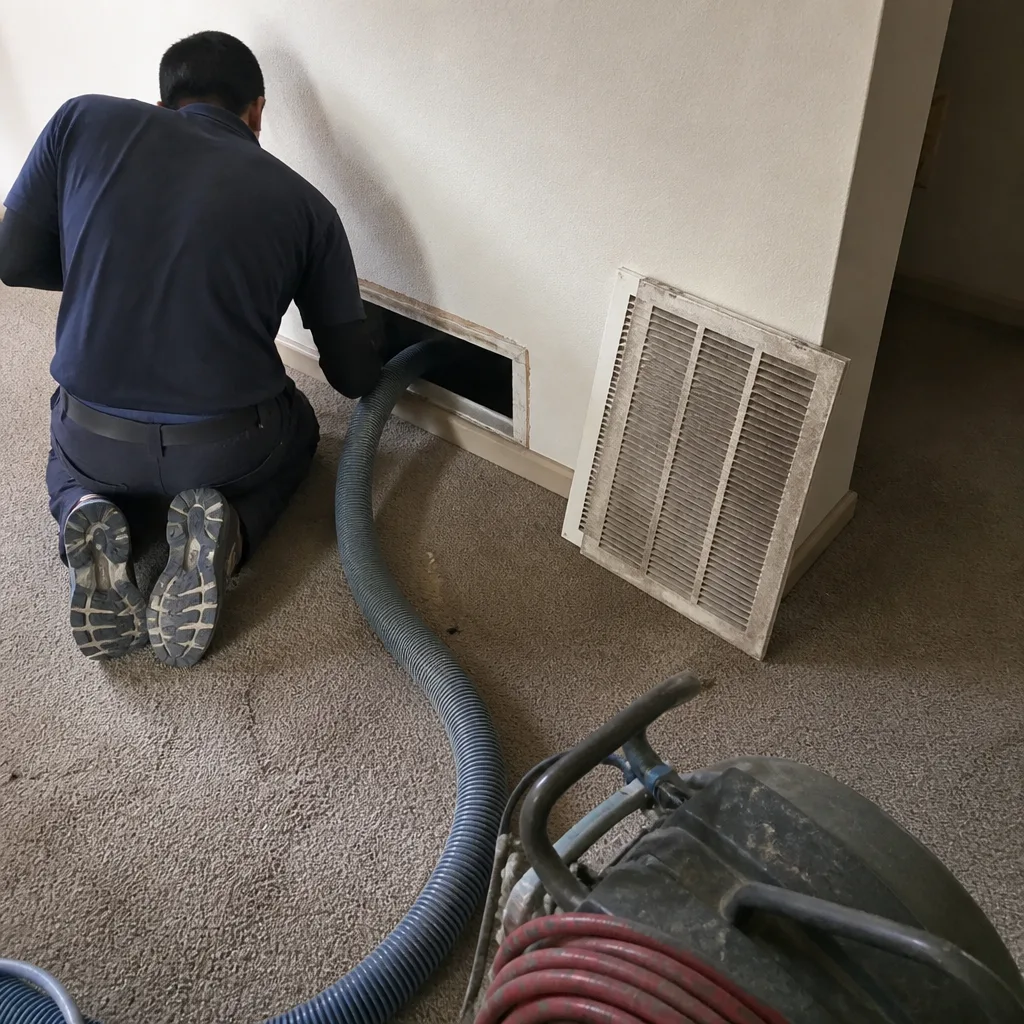
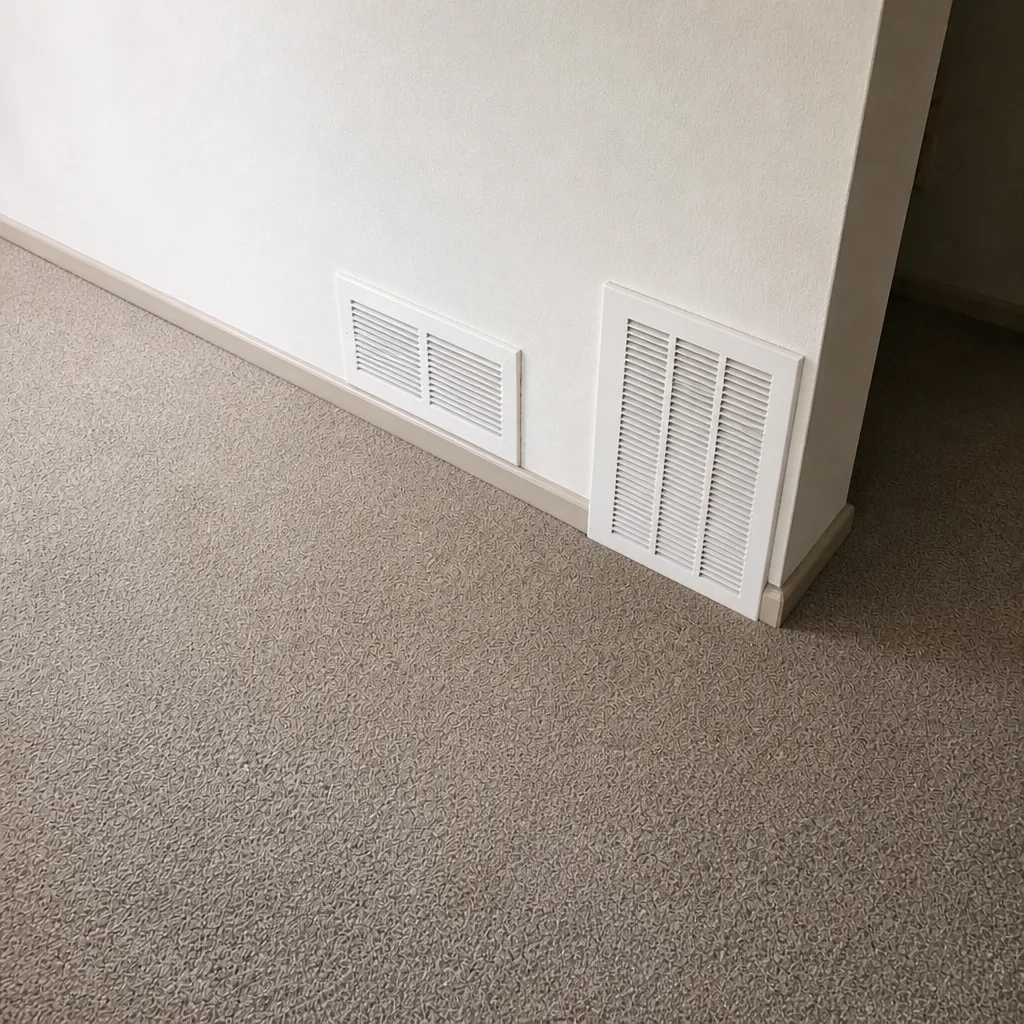
- Before-and-after photos. The technician photographs what’s inside the system before cleaning and after. You see what they see.
- One flat price per system. The written estimate sets the price before work starts. No per-vent pricing, no surprise add-ons, no coupon fees that turn into a bigger invoice once the technician is on site.
- Recommendations in the right order. Clean first where cleaning is the answer. Repair first where repair is the answer. Refer out where the HVAC unit is the problem.
We use Guardsman-backed surface protection practices on every job, because ducts live above finished floors and behind finished walls. The diagnostic should always leave your house cleaner than the technician found it.
Common Mistakes to Avoid
- Booking a second cleaning before diagnosing the first one. If dust returns within weeks of a cleaning, the cause is structural. Re-cleaning without a diagnosis repeats the same result and costs you the same money.
- Assuming a collapsed flex duct is a thermostat problem. Adjusting thermostats and dampers won’t fix a crushed run. Look inside the register before you assume the system is failing.
- Letting a clean-and-leave company skip repair. Some companies clean only and refer out repair work. That’s fine if you already know the system is structurally sound. Not fine if the reason you called is a problem the cleaning can’t fix.
- Cleaning a moldy system without closing the moisture source. The spores come back inside the year if the crawlspace, plenum, or bathroom exhaust is still feeding moisture into the system.
- Skipping the dryer vent because the HVAC ducts look fine. The two systems fail independently. A dryer vent that hasn’t been cleaned in years is a fire-safety issue regardless of how clean the HVAC ducts are.
- Accepting a per-vent price. A per-vent price tells you nothing about whether the technician will actually service the whole system. Ask for one flat price per system in writing before work starts.
- Trusting a shop vacuum and a consumer hose. Restoration-grade equipment (Rotobrush, Nikro, Abatement Technologies) exists for a reason: it reaches surfaces and extracts debris that a consumer vacuum can’t. If the equipment isn’t purpose-built for ducts, the job isn’t a duct cleaning.
See the difference
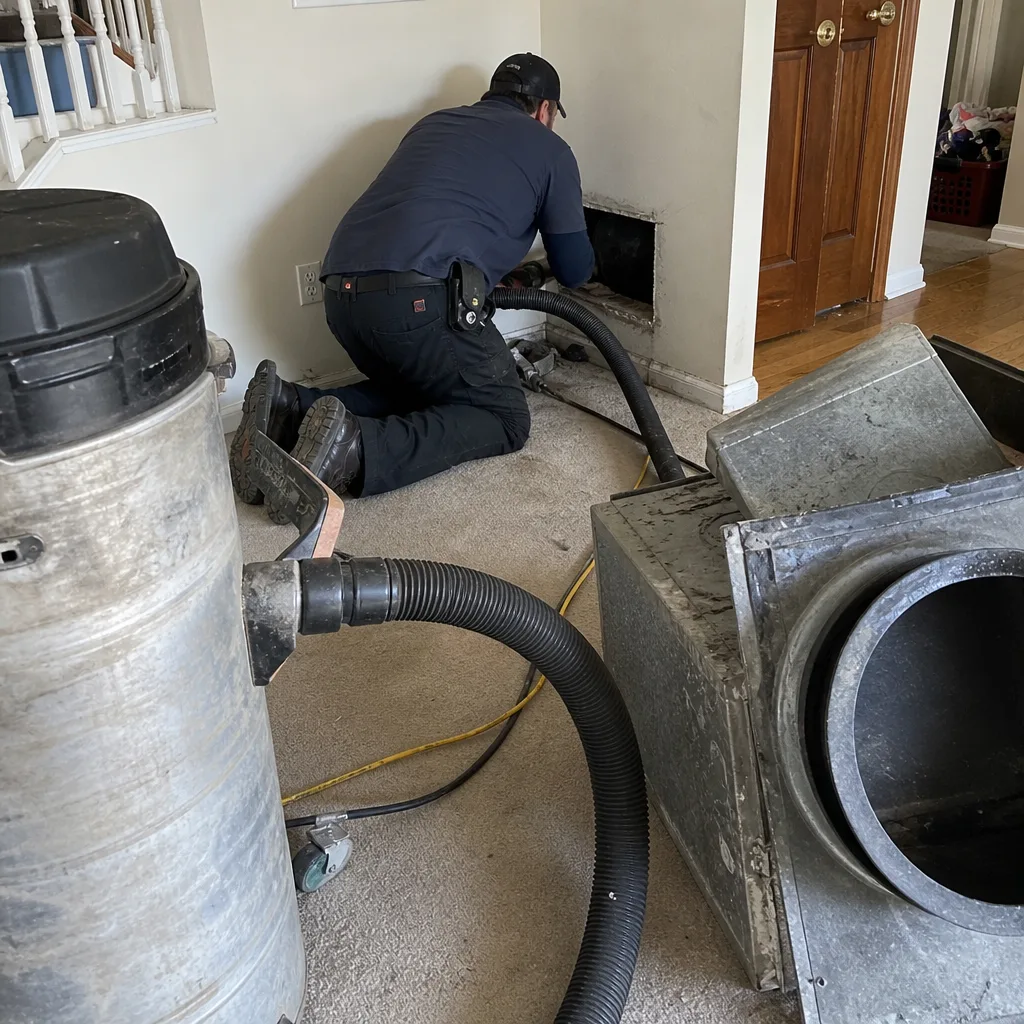 Before
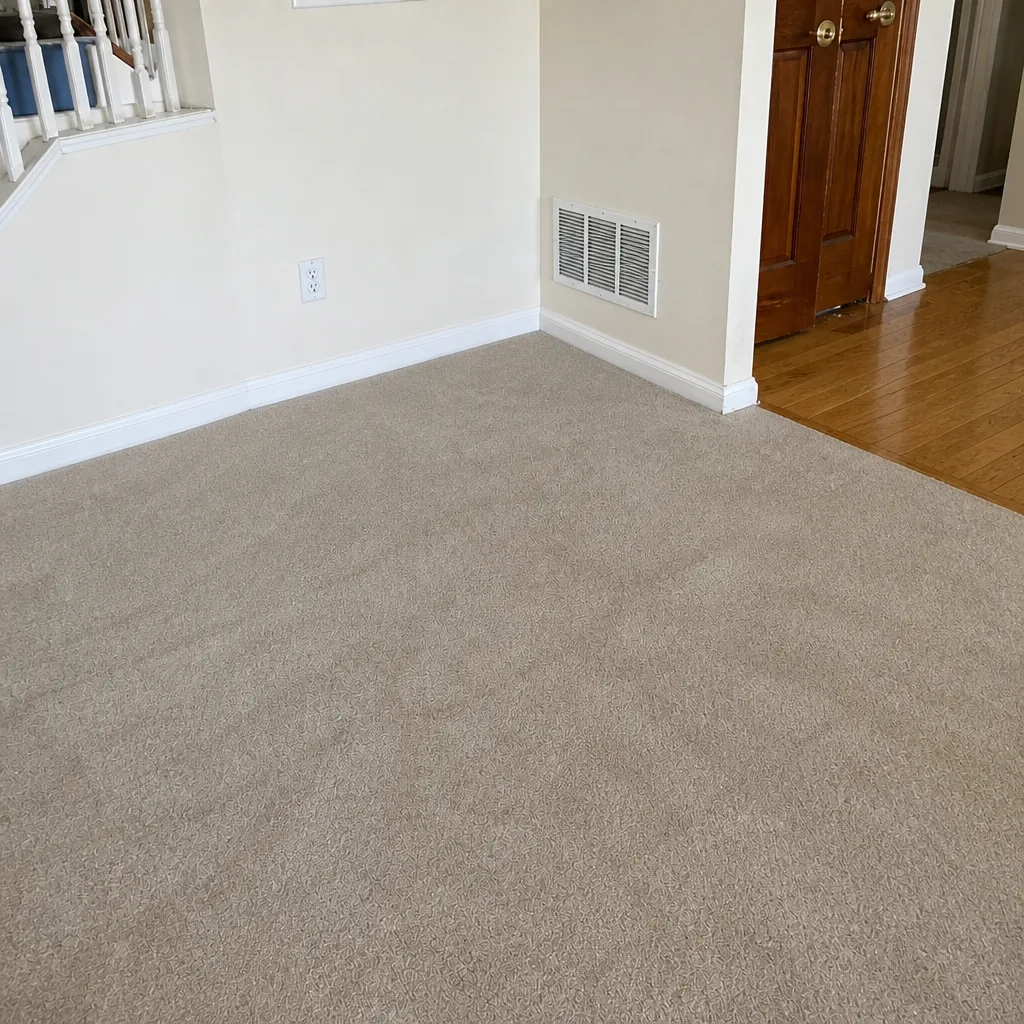 After
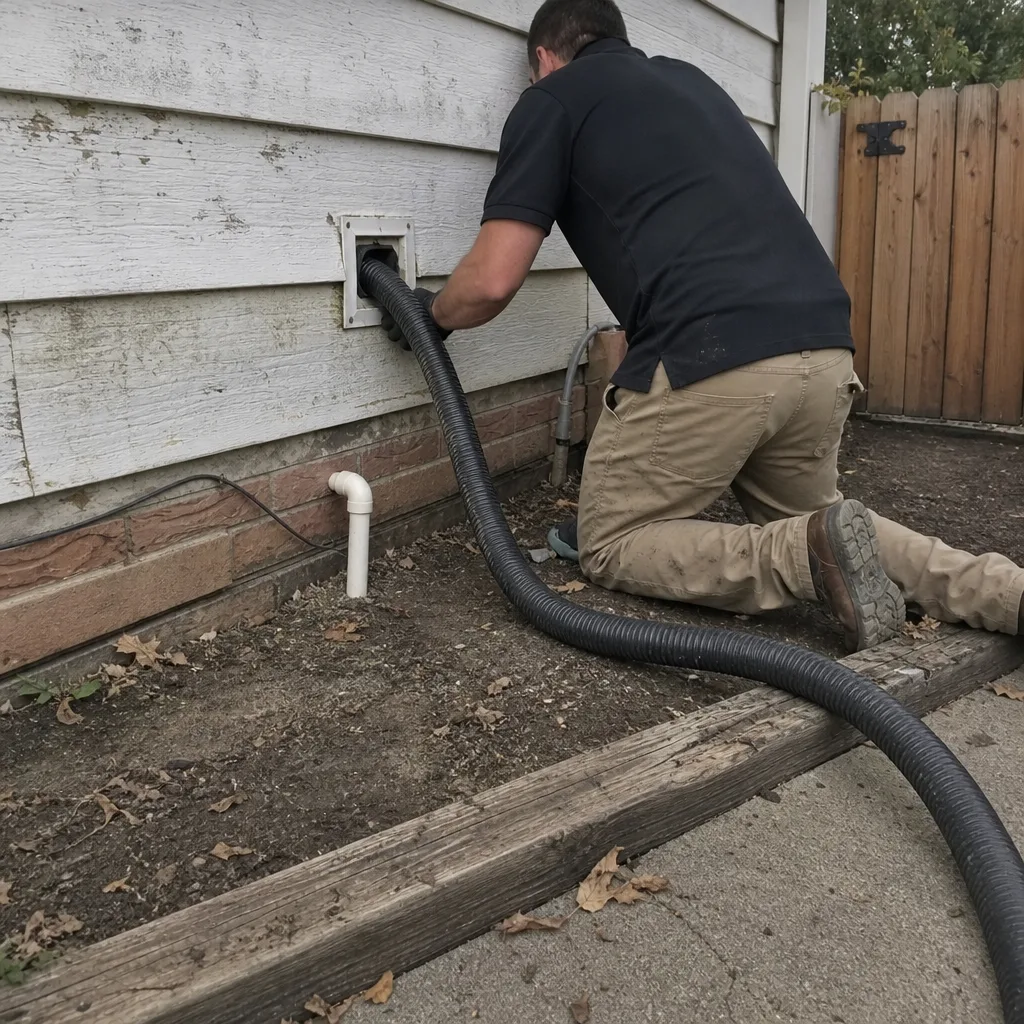 Before
 After
 Before
 After
When to Call a Professional
Call a professional if the problem is recurring, if you’ve spotted a structural fault at a register, if you’ve had moisture or a musty smell in the air from the system, or if you’ve noticed any of the dryer vent signs above. The reason to call is to get a diagnosis, not a price on a cleaning package: a proper visit determines whether cleaning, repair, or an HVAC diagnosis is the right next step, and the written estimate locks the price per system before work begins. Duct Cleaning Arvada offers free estimates in Arvada. Call (833) 370-4086. We answer 24/7, with fast dispatch from 7am to 7pm, Sunday through Friday. If you want a fuller picture of what a full duct cleaning involves, our guide to duct cleaning in Arvada walks through the process from start to finish.
Frequently Asked Questions
Because the cause was almost always leakage, not contamination. Return-side leakage on an old system pulls in attic, crawlspace, or cavity air every time the fan runs. A cleaning removes debris from inside the ducts; a leak lets new debris in from outside. The fix is to find and seal the leak before you re-clean. Call (833) 370-4086 for a free estimate on a diagnostic visit.
Pull the register grille off the affected room and look into the run with a light. A settled, kinked, or crushed flex run looks pinched or sealed inside the tube, and the airflow difference versus a healthy register is usually obvious with your hand or a piece of tissue. If you see that, the room’s problem is the run, not the thermostat. Call (833) 370-4086 and we’ll help you confirm it.
Most residential systems are designed around a total external static pressure near 0.5 inches of water column, but the “normal” range depends on the equipment and the duct design. What matters more than the number itself is the split between supply and return and the change after cleaning or repair. A technician should measure both sides before recommending anything. If a company won’t test static pressure, that’s a sign to call someone else. Call (833) 370-4086 for a free estimate.
Because cleaning doesn’t remove moisture, and moisture is what feeds the regrowth. Crawlspace humidity, an uninsulated sweaty supply plenum, a leaking return pulling from a wet crawlspace, and bath exhaust vented into the attic all feed regrowth. The fix is to close the moisture source first, then clean and, where appropriate, add filtration with components like Honeywell or Aprilaire. Call (833) 370-4086 to schedule a diagnostic visit.
There’s no single answer that fits every home. Some systems benefit from a cleaning every few years; others stay clean much longer if the system is sealed and well-filtered. What matters more than a fixed schedule is whether the system is showing symptoms: recurring dust, uneven airflow, musty odors, or a recent remodel. Cleaning on symptoms beats cleaning on a calendar. Call (833) 370-4086 for a free estimate and we’ll tell you honestly if it’s not needed yet.
Because they often price only the surface of the job. A low number usually means a shop vacuum, a consumer hose, and no containment, no extraction, no static pressure testing, and no repair capability. The clean is superficial and the price reflects it. Ask what equipment is used, whether they test static pressure, and what happens if they find a structural fault. Our estimate is one flat price per system and the written estimate sets the price before work starts. Call (833) 370-4086 for a free estimate.
You should see before-and-after photos of your own ducts, not stock images. You should see purpose-built equipment on-site (Rotobrush or Nikro systems plus Abatement Technologies containment if the job calls for it). You should get one flat price per system agreed before work starts. And you should see the technician walk the system with you at the end and explain what was cleaned and what was repaired. If any of those are missing, ask why. Call (833) 370-4086 for a free estimate.
The Bottom Line
If your ducts seem to fail again after a cleaning, the cleaning almost certainly wasn’t the problem. Look at the fundamentals: leakage versus contamination, collapsed flex runs, static pressure, and moisture. Cleaning is the right fix for contaminated ducts. Repair is the right fix for structural damage. A diagnosis is the right fix for everything else. If you’d like a technician who tests the system before cleaning it, uses restoration-grade equipment, and repairs what’s actually broken inside the ducts, Duct Cleaning Arvada can help. Call (833) 370-4086 for a free estimate. We answer 24/7, with fast dispatch from 7am to 7pm, Sunday through Friday. Our technicians have up to 12 years of experience.
Written by the team at Duct Cleaning Arvada.